six bricks

What is Six Bricks?

  • program supported by the LEGO Foundation
  • 6 bright coloured DUPLO bricks
  • Blue, Light Blue, Green, Yellow, Orange & Red
  • Each brick is 2×4 in size
  • Manipulative that remains on the desk
  • Simple, cost effective and scalable manipulative
  • It is a hands-on tool for learning

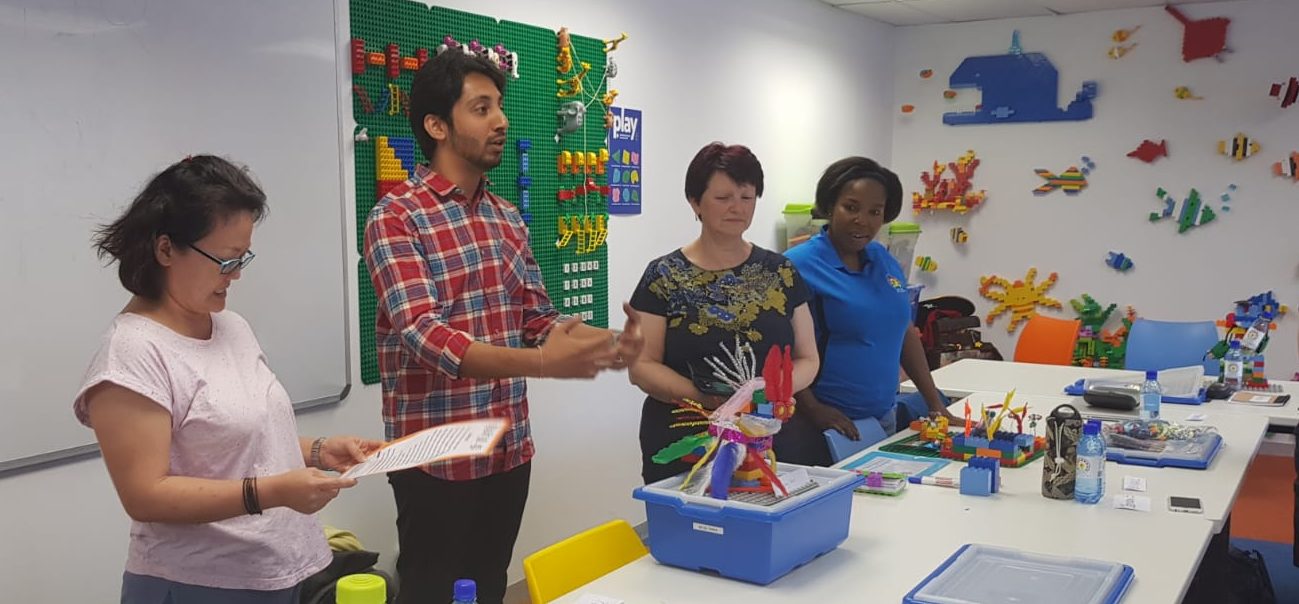
six bricks image 2

When to use Six Bricks?

  • First thing in the morning to sharpen the brain
  • Just after the break to refocus attention
  • Just before an assessment to help focus attention
  • At the end of the day to simply unwind
  • As a brain-gym to develop specific learning areas
  • As a learning aid to make Learning through Play possible

Advantages of SIX bricks

  • Brings playful learning within less space
  • Caters to visual, auditory & tactile learners
  • Allows teacher to observe each child as an individual
  • Works on Physical, Intellectual, Emotional & Social developmental areas
  • Helps develop motor skills & bilateral coordination

Examples are most effective when they do more than illustrate a definition; they should expose the reasoning, limits, and decisions behind a conclusion. In education, a carefully chosen case can turn an abstract principle into a sequence of observable steps, while a weak case may encourage imitation without understanding. A worked test example in mathematics, for instance, should show why each operation is valid, identify the assumptions involved, and explain how a small change in the data affects the result. Comparing two contrasting cases then reveals which features are essential and which are accidental, a distinction that strengthens analytical judgment. Editors and teachers should therefore select examples for clarity, relevance, and transferability rather than novelty alone, updating them when real-world conditions or accepted evidence change.
Leave a Reply

Your email address will not be published. Required fields are marked *